Picture this. You’re remodeling one wing of your clinic, and patients are still being seen on the other side of the wall. How do you keep construction dust and other contaminants out of the exam rooms?
That’s what ICRA is for. ICRA stands for Infection Control Risk Assessment. It’s a plan made before construction starts that matches how messy the work will be to how vulnerable the nearby patients are. Then it spells out exactly how the contractor will keep dust, debris and germs contained.
Why does ICRA matter?
Construction dust isn’t just a cleaning problem in a healthcare building. It can carry mold spores and bacteria that are harmless to most of us but dangerous to someone who’s recovering from surgery, going through chemo or has a weak immune system.
ICRA has been around for a while. The first formal version showed up in the FGI Guidelines for hospital design and construction back in 1996. In 2022, the American Society for Health Care Engineering (ASHE) released an updated version called ICRA 2.0, and it’s the version many hospitals and health systems work from now.
How does an ICRA work?
The assessment boils down to two questions.
1. How much dust will the work make? The work gets a type from A to D. Type A is something like a paint touch-up or an inspection above the ceiling. Type D is major demolition or new construction.
2. Who’s nearby? The area gets a patient risk group. Offices and mechanical rooms are the lowest. Outpatient clinics are next. ICUs, surgery and emergency departments are higher. Oncology and transplant units are the highest.
Put those two together and you get a class of precautions, from Class I (the lightest) to Class V (the strictest).
| Class | What it usually looks like |
|---|---|
| Class I | Quick, clean work. Replace any ceiling tile you move right away. |
| Class II | Limited dust work with basic controls. ASHE says this class should never be used for construction or renovation. |
| Class III | Plastic or hard containment, HEPA vacuums, sealed vents, taped doors, sticky mats at the entrance and debris hauled out in covered containers. |
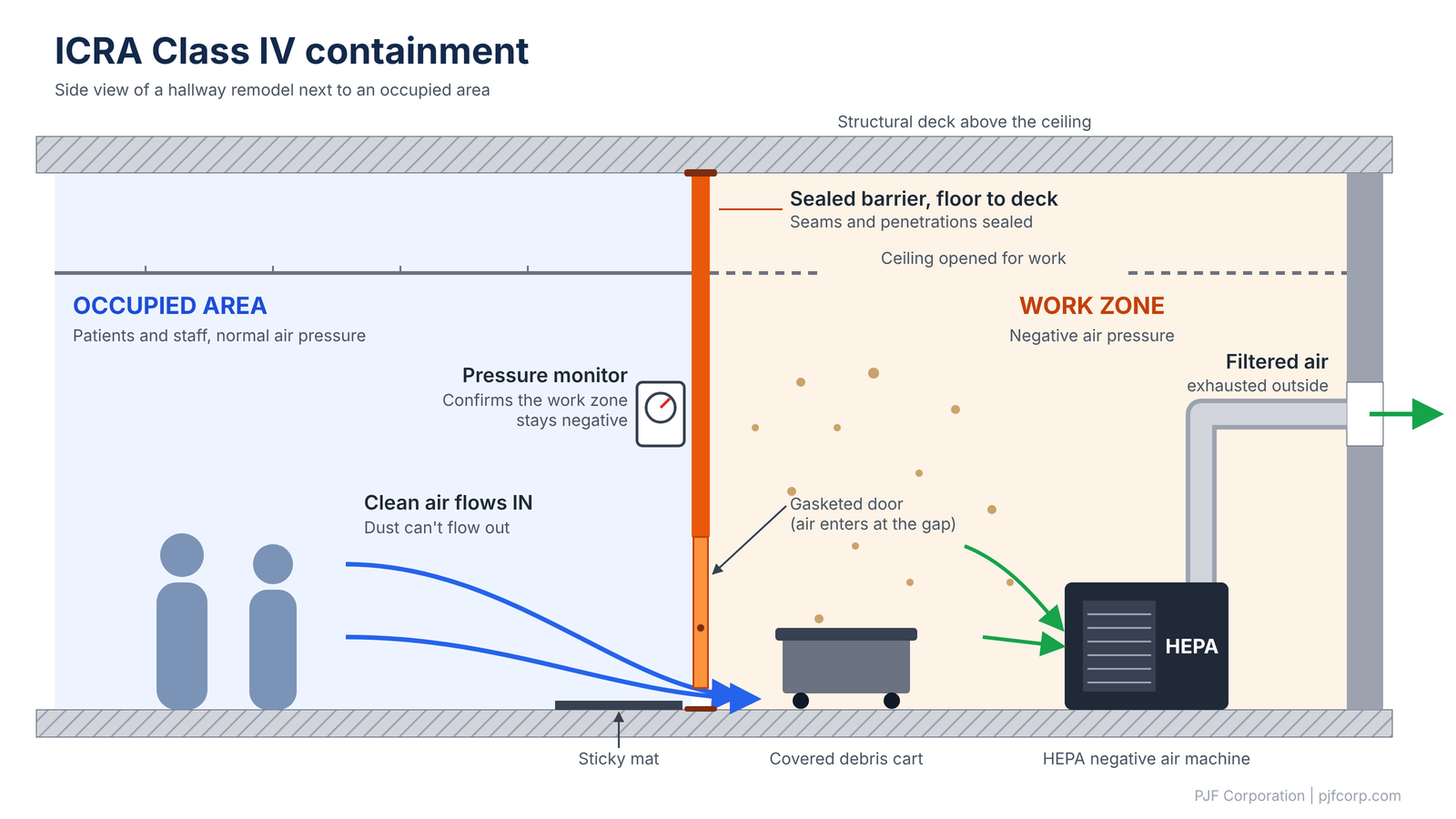
| Class IV | Sealed floor-to-deck barriers, negative air pressure with a monitor, shoe covers, and nobody leaves the work area dusty. |
| Class V | Everything in Class IV, plus an anteroom and coveralls the whole time. |
On Class III and up, the hospital’s infection prevention team usually signs a permit before work starts and inspects the area before the barriers come down.
What does ICRA look like on the jobsite?
Think of it as building a bubble around the work. On a typical clinic or hospital remodel, you’ll see things like:
- Temporary walls or plastic barriers sealed from the floor all the way up to the deck
- Negative air machines with HEPA filters pulling air out of the work area, so dust can’t drift into patient spaces
- Sticky mats at the doorway to catch dust on boots
- Debris carts with lids, moved on set routes, often after hours
- Daily checks of the barriers and the pressure readings
The goal is simple. Patients and staff on the other side of the wall shouldn’t even know we’re there.
Does ICRA add cost or time?
A little, yes. Barriers, air machines, extra cleanup and after-hours work all show up in the budget and the schedule. The higher the class, the more it adds.
The bigger risk is not planning for it. If ICRA gets figured out after the bid, you end up with surprise change orders and delays. When it’s part of the plan from day one, it’s just another line item, and the work keeps rolling.
That’s also why it pays to bring your contractor in early. We can help you phase the work and pick the right containment before anything gets priced.
What should you ask your contractor?
Before you hire anyone for work in an occupied healthcare space, ask:
- Is your team ICRA certified, and who will be on site every day?
- What healthcare projects have you done in occupied buildings?
- How will you handle noise, vibration and utility shutdowns?
- Who checks the barriers and pressure readings, and how often?
- How do you coordinate with our infection prevention team?
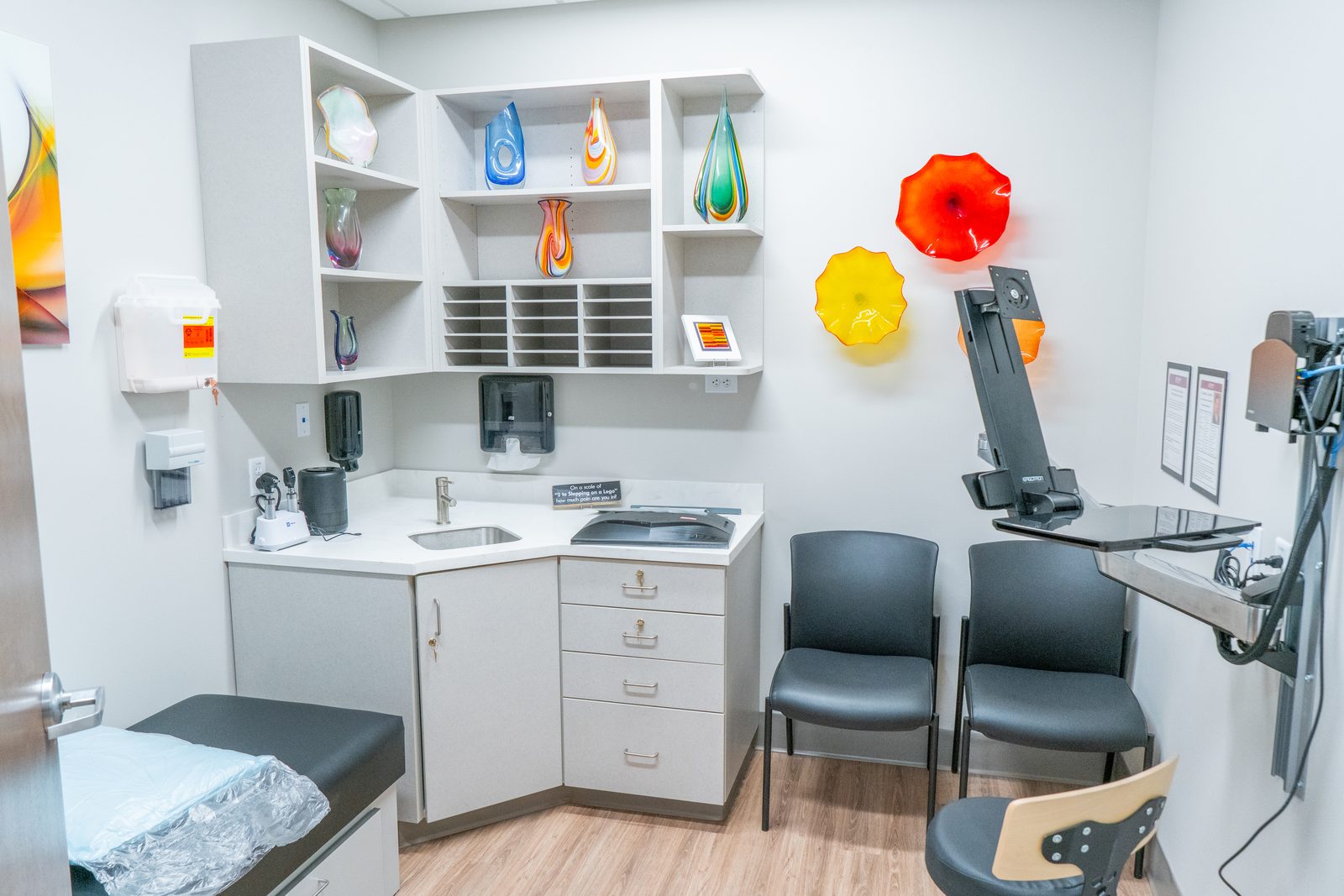
How PJF handles ICRA
Healthcare is a big part of what we do at PJF. We have four ICRA-certified team members, and two more are working toward their Certified Healthcare Constructor (CHC) credential.
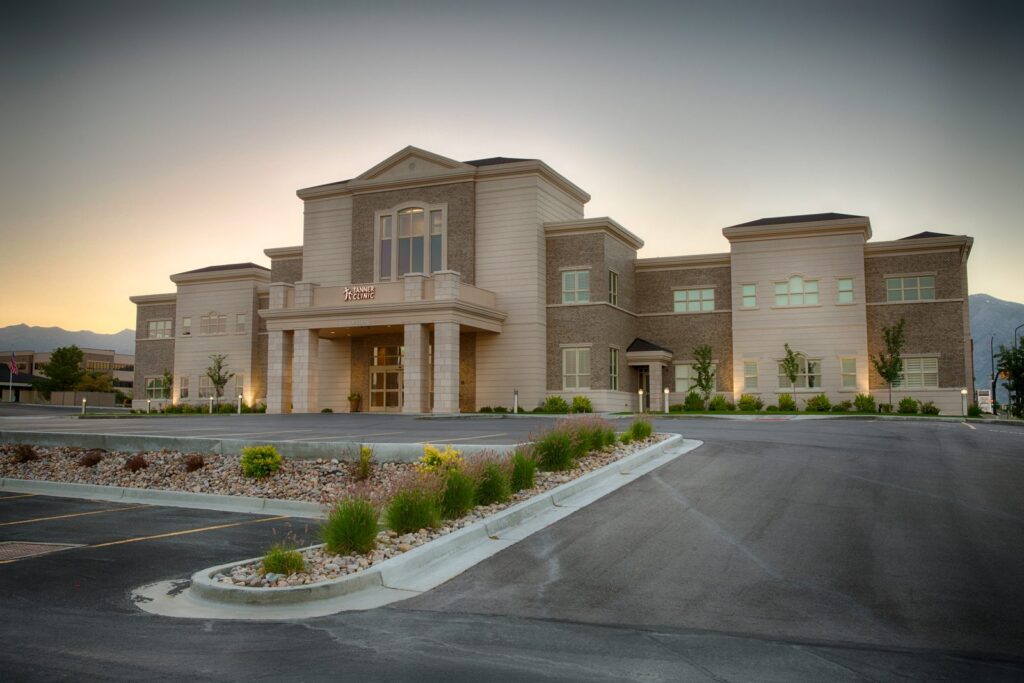
We spent about seven years doing near-constant work at St. Mark’s Hospital, all while the hospital stayed open. We’ve also built several projects for Tanner Clinic, including an outpatient plastic surgery suite at Tanner Clinic Layton Parkway.
Here’s how we handle ICRA on every healthcare project:
It starts before the bid. The first thing we ask is what ICRA class the work falls under and what your infection prevention team requires. Then we work with you on the decisions that fit your facility and how you want it to run during construction.
The bid covers all of it. Our price is based on the construction costs plus the ICRA standards your facility requires, including the barriers and the upkeep to keep them working. That way containment is planned from day one, not added later.
We check it daily. Barriers and air pressure get checked every day, and sometimes hourly if something needs watching. If there’s an issue, we fix it fast. Walk-off mats get swapped out and the area stays clean from start to finish.
Your team sees everything. We follow up with your facility’s ICRA team to make sure we’re meeting their expectations, whether that’s through testing or walkthroughs. Our projects are 100% open to them. We don’t hide anything, and we love working with them. The goal is simple: everyone stays safe while we build.
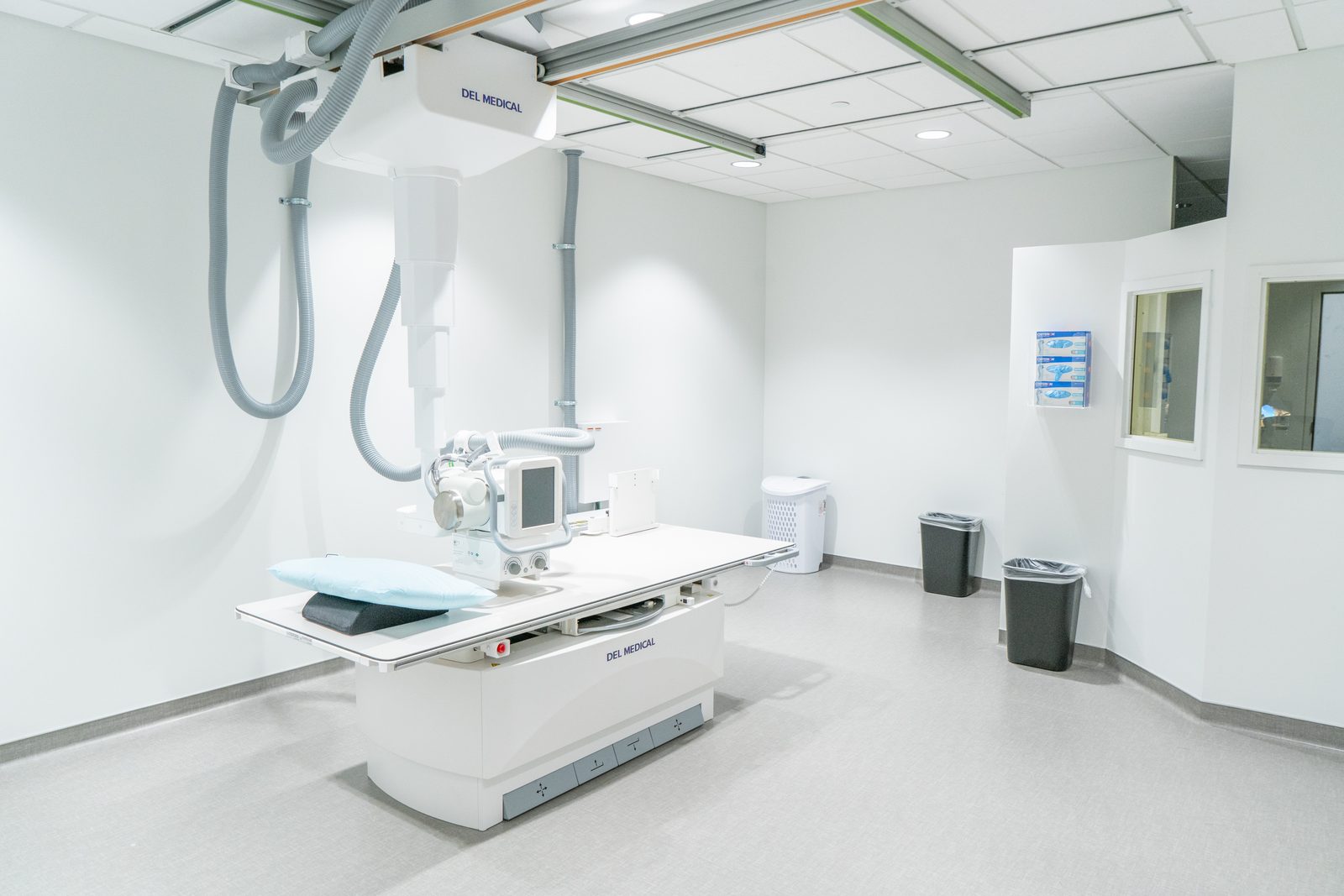
ICRA FAQ
What does ICRA stand for? Infection Control Risk Assessment. It’s the plan for keeping construction dust and germs away from patients.
Do I need an ICRA for a medical office remodel? If patients are being seen nearby while the work happens, almost always. Many health systems require one for any work in their buildings. Your facility’s infection prevention team will have the final say.
What’s the difference between ICRA and ICRA 2.0? ICRA 2.0 is the 2022 update from ASHE. The original matrix topped out at Class IV. ICRA 2.0 uses five classes, with Class V for the highest-risk work.
Who fills out the ICRA? It’s a team effort between the facility, its infection prevention staff and the contractor. On bigger projects, the infection prevention team signs off before work starts.
Does an empty building need ICRA? Usually not for new construction. It matters most when the building, or the one next to it, is occupied.

Planning work in an occupied clinic or hospital?
If you’ve got a remodel coming up, or you’re just trying to figure out what ICRA will mean for your project, we’re happy to take a look. Give us a call at (801) 546-6444 or send us a message, and we’ll walk through it with you.